A school meal is often treated as a simple intervention: provide food, and children can stay in school and learn.
In Kenya, school feeding has become an important part of the response to hunger and food insecurity. The Government School Feeding Programme (GSFP) supports meals for children in public primary schools, particularly in arid, semi-arid and other food-insecure areas. Kenya’s school meals programmes reached an estimated 3.2 million primary school children in 2025. The need is significant. For many children, school is where a substantial share of their daily food is consumed. When meals are available, they can support concentration, attendance and learning. For some children from food-insecure households, the school meal may also be one of the few reliable meals they receive during the day.
But getting food to school is only part of the problem.
Schools have to work within limited resources, changing food prices, supply challenges and other constraints that affect what can be purchased and served. Meals can also lack diversity, with cereals and pulses making up much of what is available while fresh vegetables, fruits and other nutrient-rich foods remain limited. This matters because hunger and nutrition are not the same problem. A child may receive a meal and still not receive the range of nutrients needed for healthy growth and development. Kenya’s wider food system faces the same tension. Food may be available without being affordable, accessible or sufficiently nutritious. UNICEF has identified child food poverty as an ongoing concern and has called for food systems that better meet children’s nutritional needs.
In the Mukogodo Ecosystem, these challenges intersect with a dryland environment where drought and pressure on livelihoods can affect household access to food. When families are struggling with food availability and schools face their own constraints, relying entirely on food coming into the school leaves little room for local solutions.
The ACTNOW KENYA narrative
Could schools produce some of the food they need?
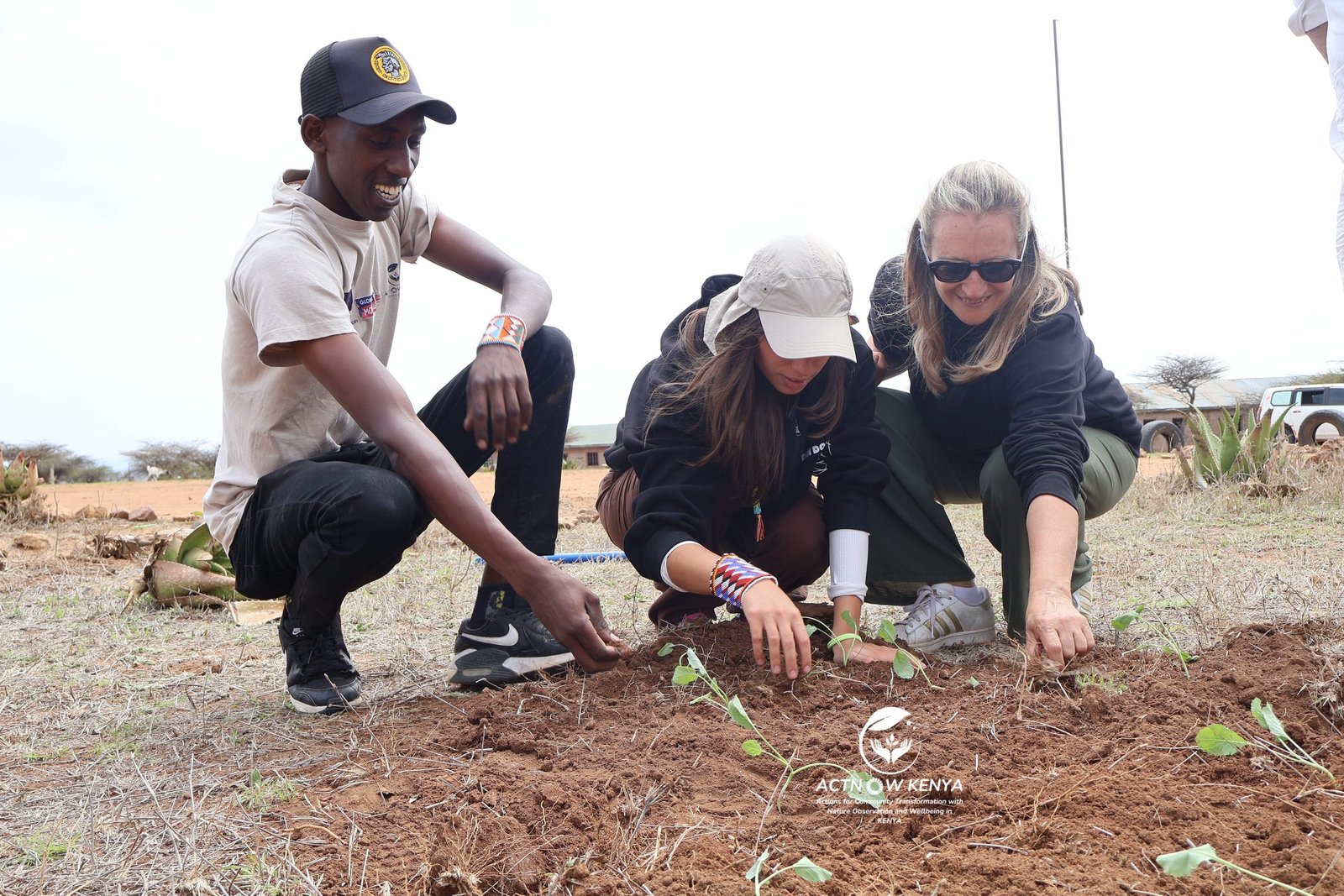
The idea is not to replace government school feeding, but to explore how schools and communities can contribute to the food system using resources already available to them. Across public schools, parts of school compounds remain underutilized. With the right approach, some of these spaces can be used to grow food and contribute to what is available at school. At Ng’abolo Comprehensive School, this approach has taken shape through an 864 m² school garden — the NKISHON Agroecology Hub. The garden produces fresh vegetables for the school community, complementing school feeding with local food production. It offers a different way of looking at the school compound: not only as a place where food is received and consumed, but also as a place where food can be produced.
For ACTNOW KENYA, this is where the NKISHON journey begins.
In a food-insecure ecosystem like Mukogodo, making better use of available land and local resources is part of strengthening the food systems that communities depend on. The question is no longer only how to get food to schools. It is also:
How can schools become part of the local food system?